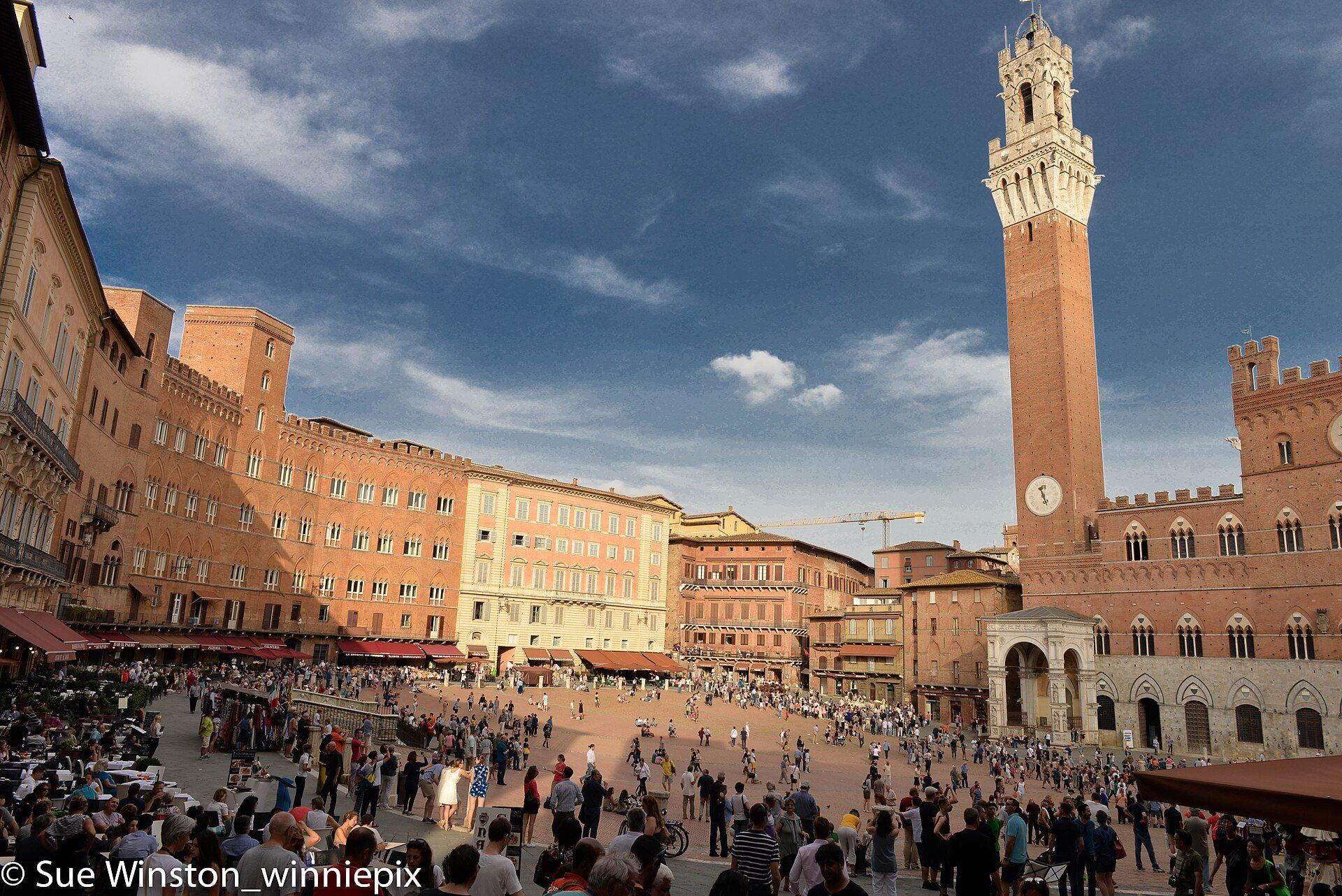
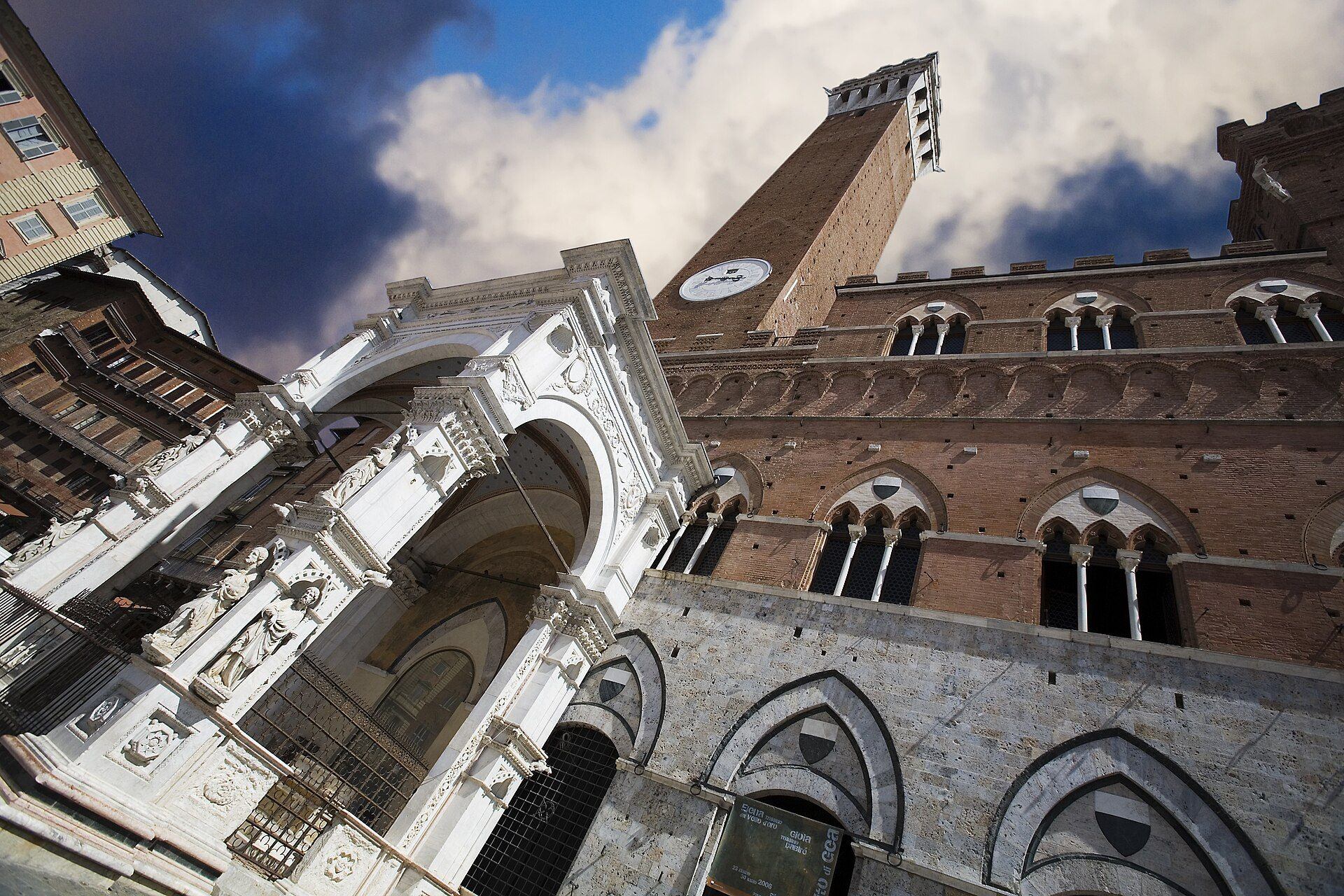
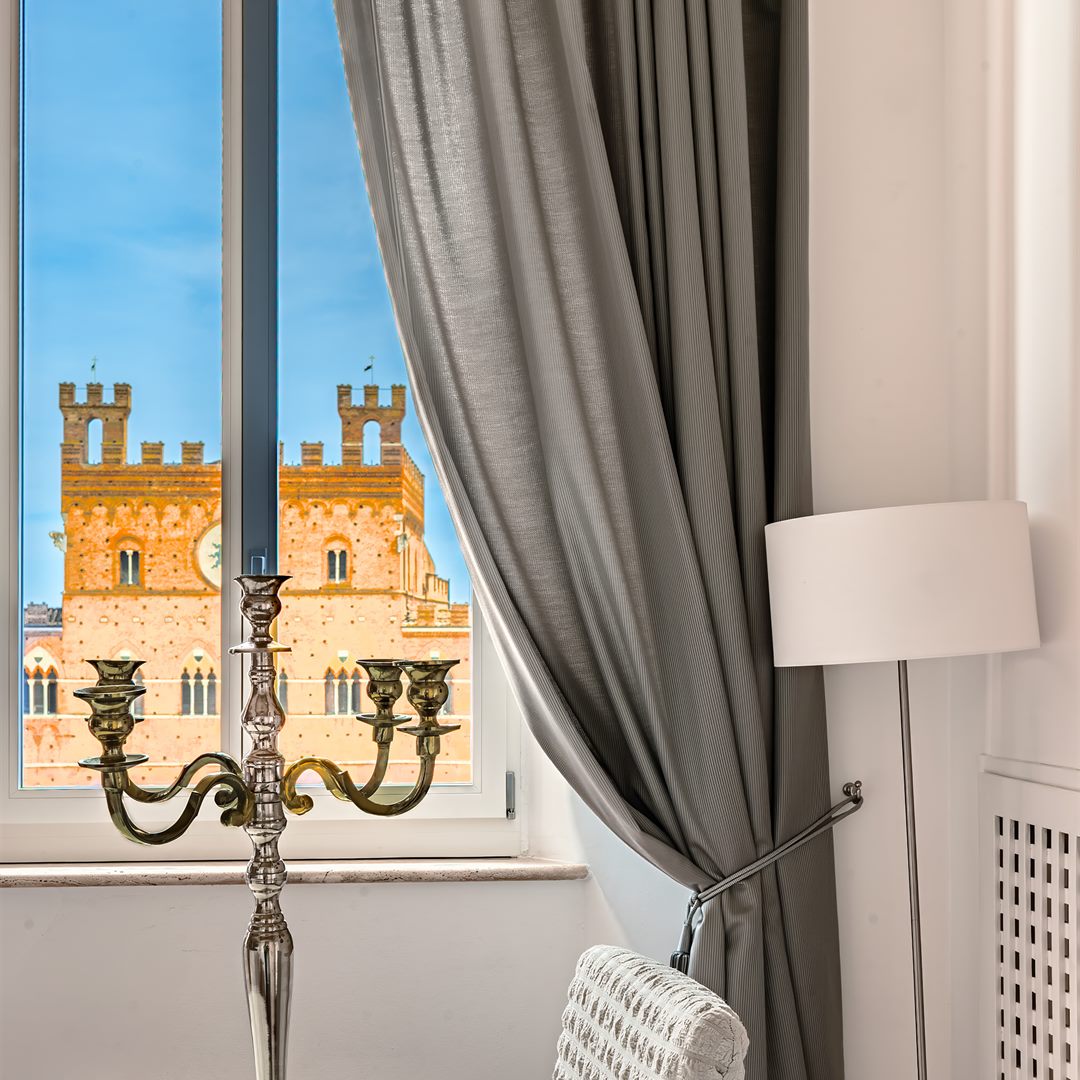
Piazza del Campo in Siena seen from above
The Palio di Siena

The Palio cannot be explained. Only lived.

This is no pageant for tourists. It is Italy's most authentic festival: an entire city that, twice a year, returns to the Middle Ages — for real.

The Palio di Provenzano race in Piazza del Campo
The origins

Four centuries of racing. Never once interrupted for fashion.


The word comes from the Latin pallium: the precious cloth given as the prize. Siena has always raced — in the Middle Ages the Palio was run «alla lunga», through the streets of the city. Then the race moved into its drawing room: Piazza del Campo, «alla tonda», three laps. It has been documented in this form since 1633, and it has never become a performance: July 2 for the Madonna of Provenzano, August 16 for the Assumption.

The prize is the Drappellone, a silk banner painted each time by a different artist. The Sienese, with their peculiar rough tenderness, call it «il cencio» — the rag. Yet for that rag people weep, scheme and wait a lifetime: there is no money at stake, only honor. Which in Siena is worth far more.

And when the world offers a truly unrepeatable occasion, Siena races outside the calendar: the Palii straordinari — one was even run in 1969 to celebrate the Moon landing. Because in Siena, nothing truly important is real until it has passed through the Campo.

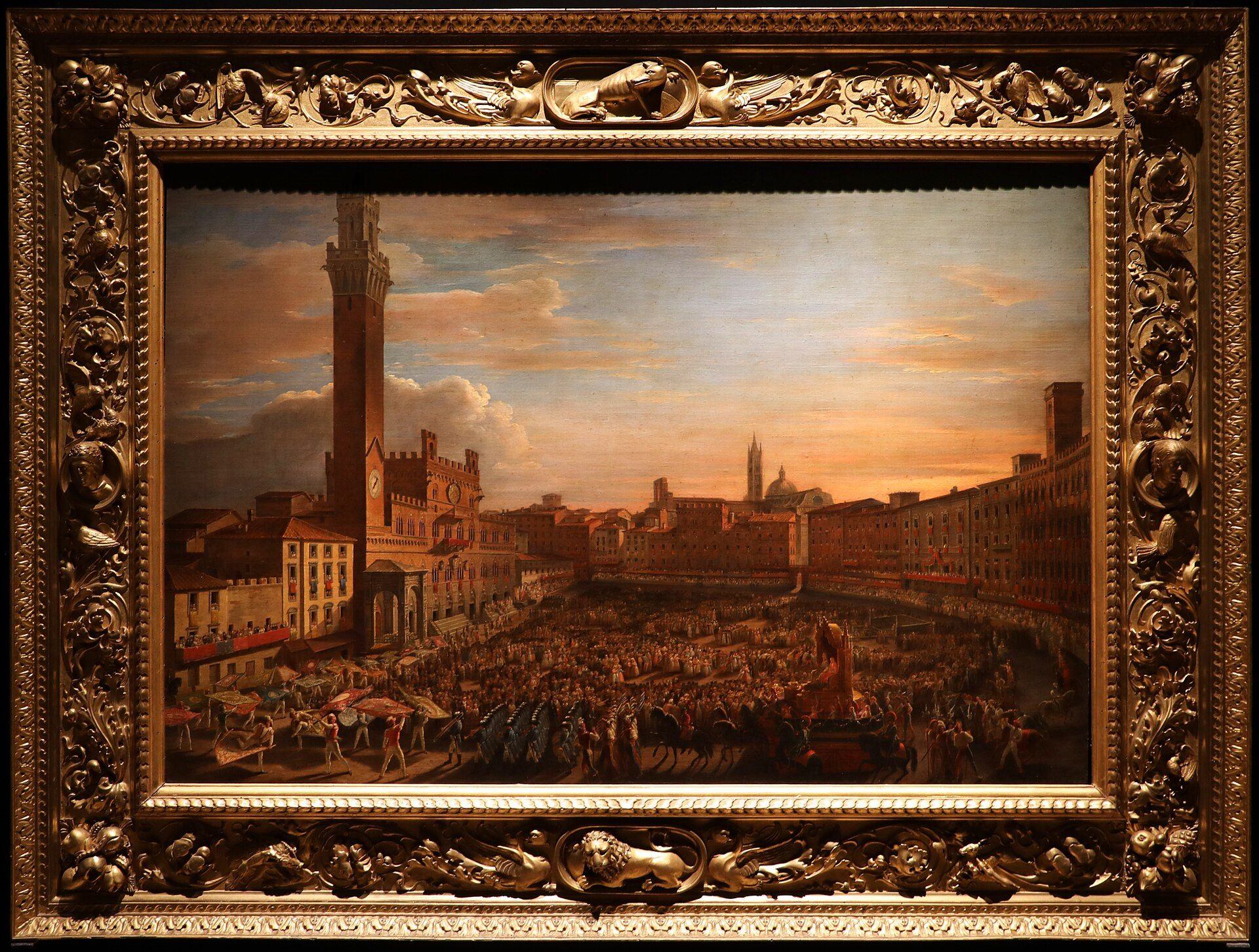
The procession of the Palio di Siena of August 18, 1833, painted by Francesco Nenci in 1849
The Palio procession of August 18, 1833, painted by Francesco Nenci in 1849: two centuries ago, the square was already this one.
The Contrade

Seventeen little homelands.


Aquila, Bruco, Chiocciola, Civetta, Drago, Giraffa, Istrice, Leocorno, Lupa, Nicchio, Oca, Onda, Pantera, Selva, Tartuca, Torre, Valdimontone. Every Sienese is born into a contrada and belongs to it for life: each has its own church, its museum, its baptism, its colors.

0
Contrade
0
At the rope each Palio
0
Days of celebration
0
Drappellone

Seven contrade race by right, three are drawn by lot.
The rivalries are centuries old. So are the alliances.

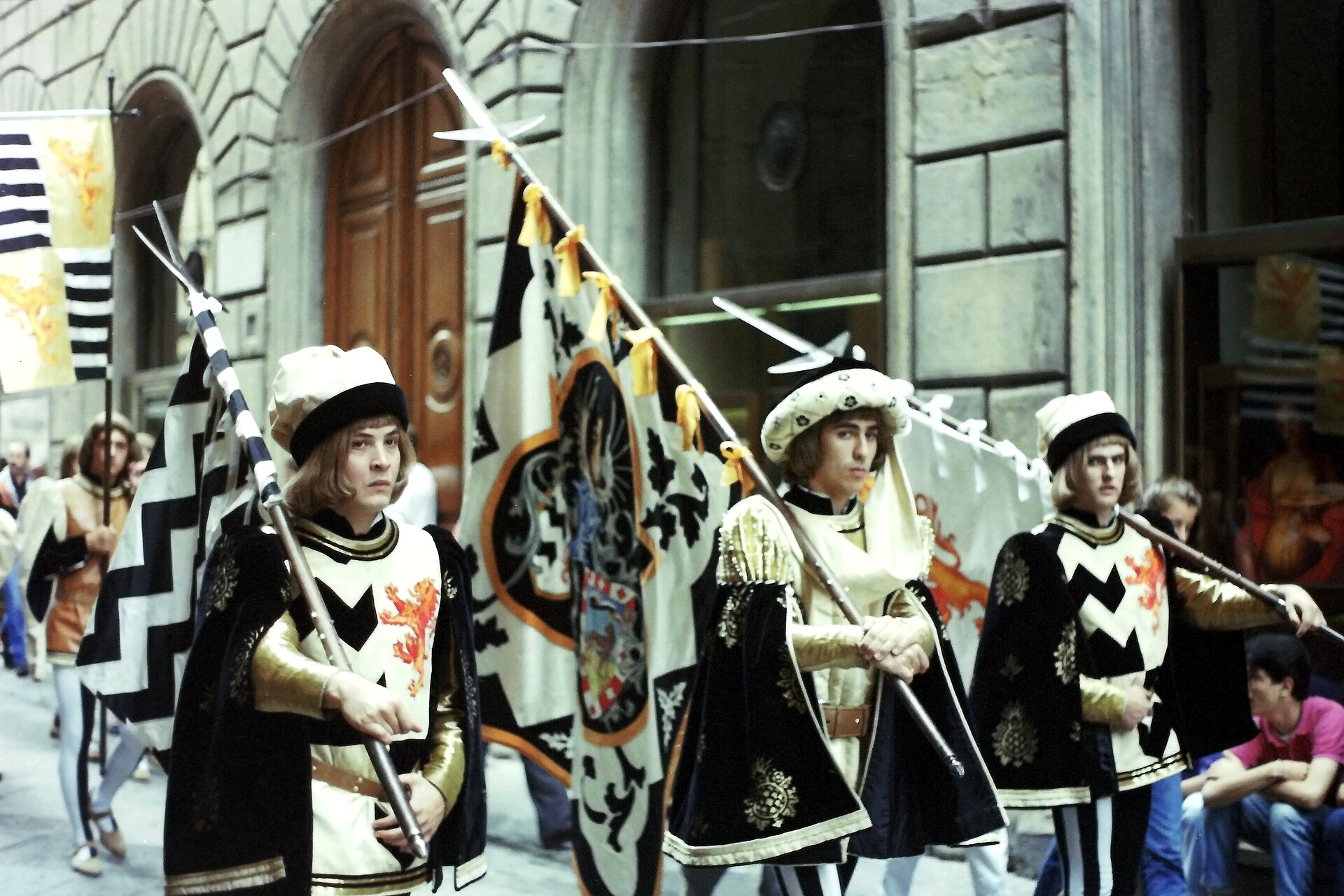
Chief page of the Valdimontone contrada in the Historical Procession
The Historical Procession

Two hours of Renaissance, before the storm.


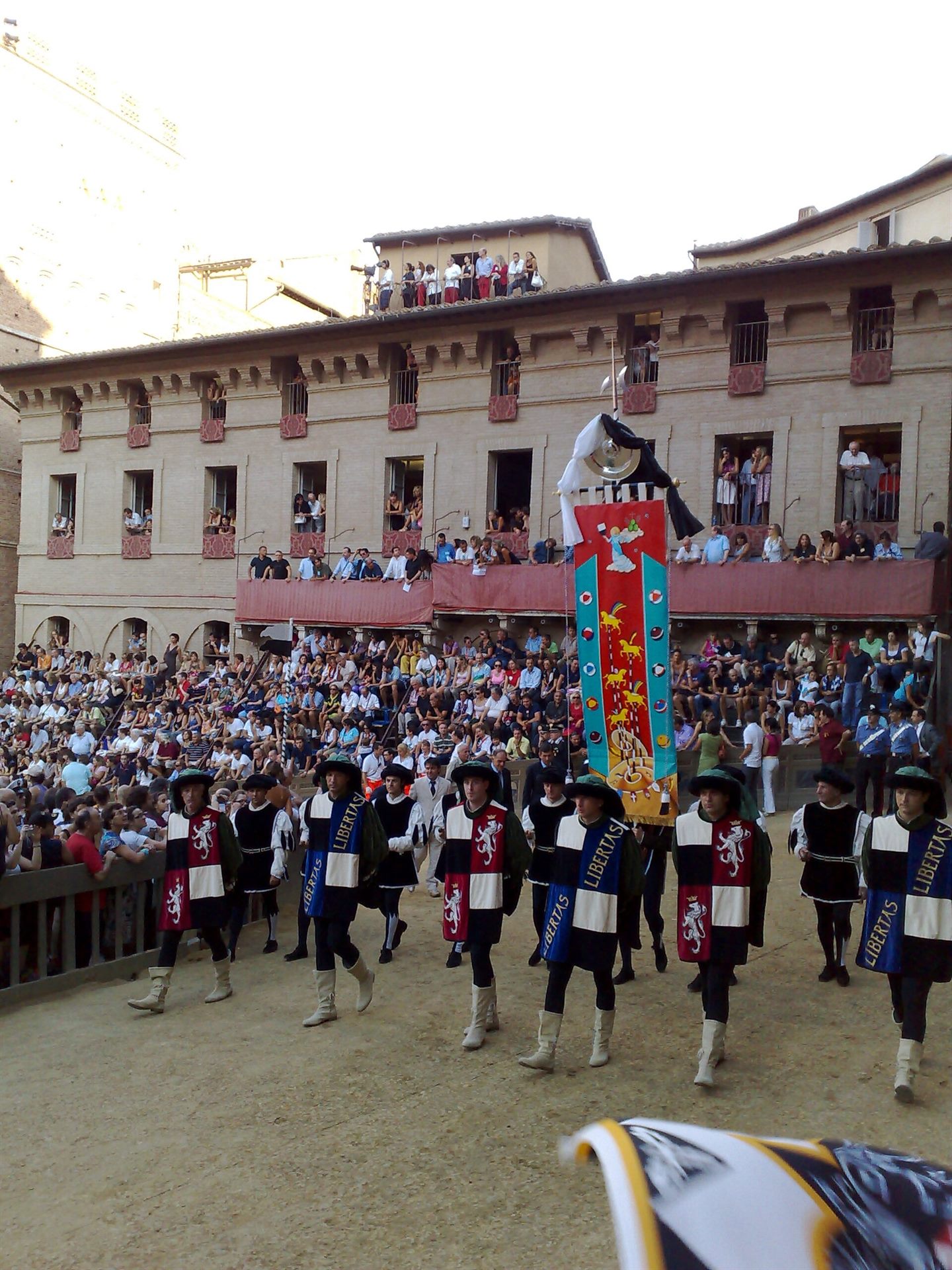
In the late afternoon, as the bell of the Torre del Mangia — the Sunto — tolls over the square, the tufa track becomes a stage: this is the Passeggiata Storica, the memory of the Republic of Siena brought back to life. Some six hundred figures parade in Renaissance costume, and they are no extras: they are Sienese of the contrade, and the costumes are embroidered velvets kept like relics.

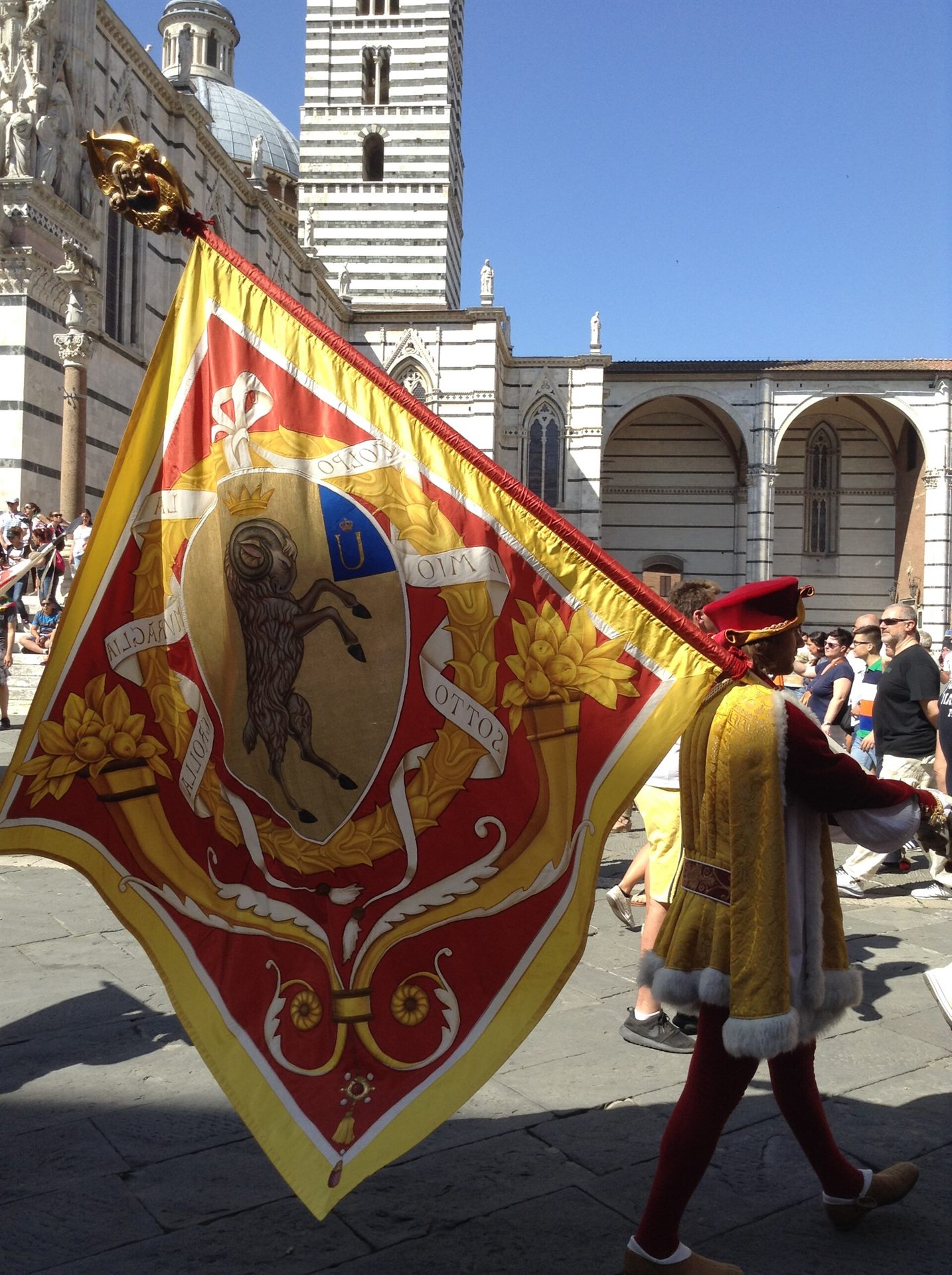
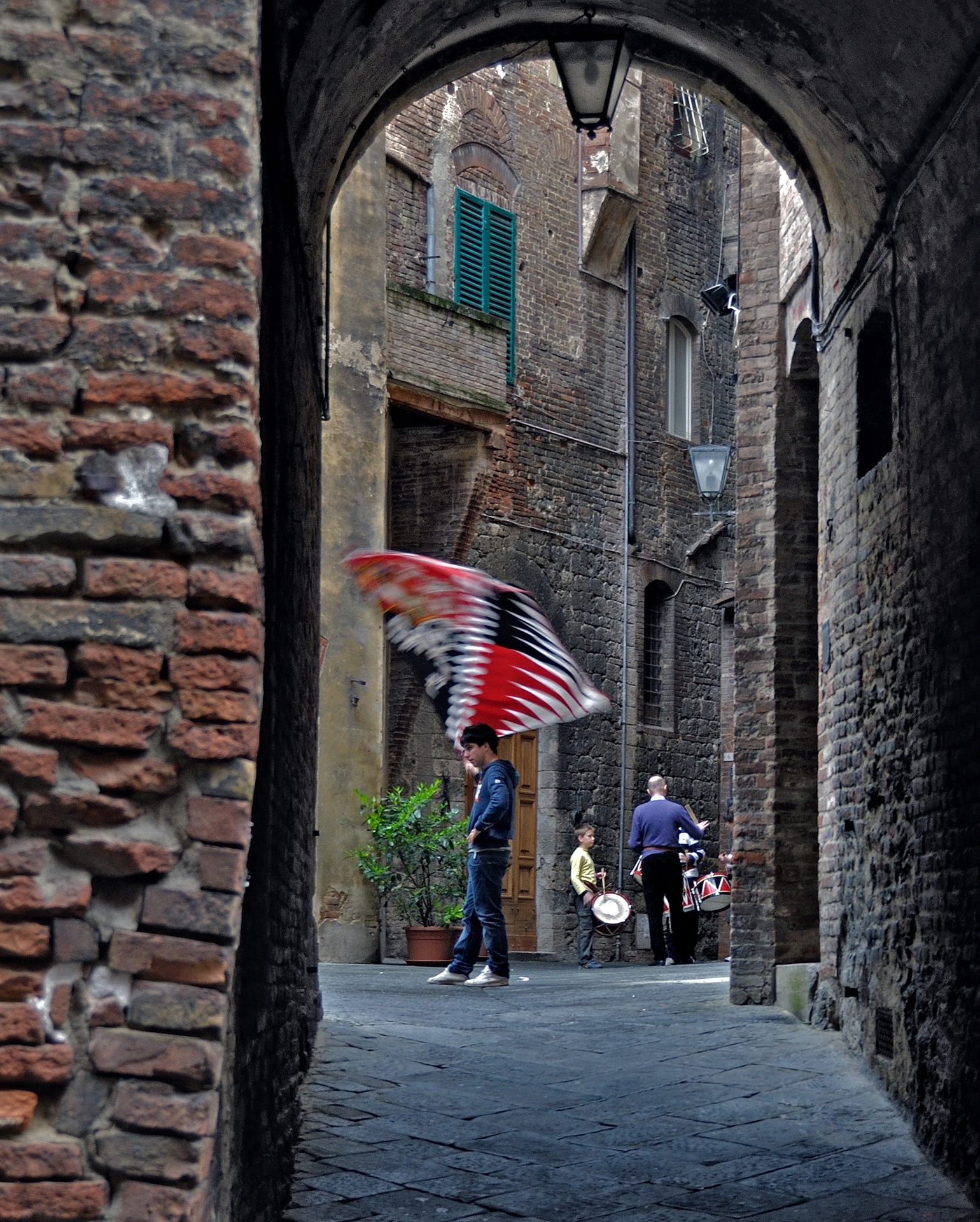
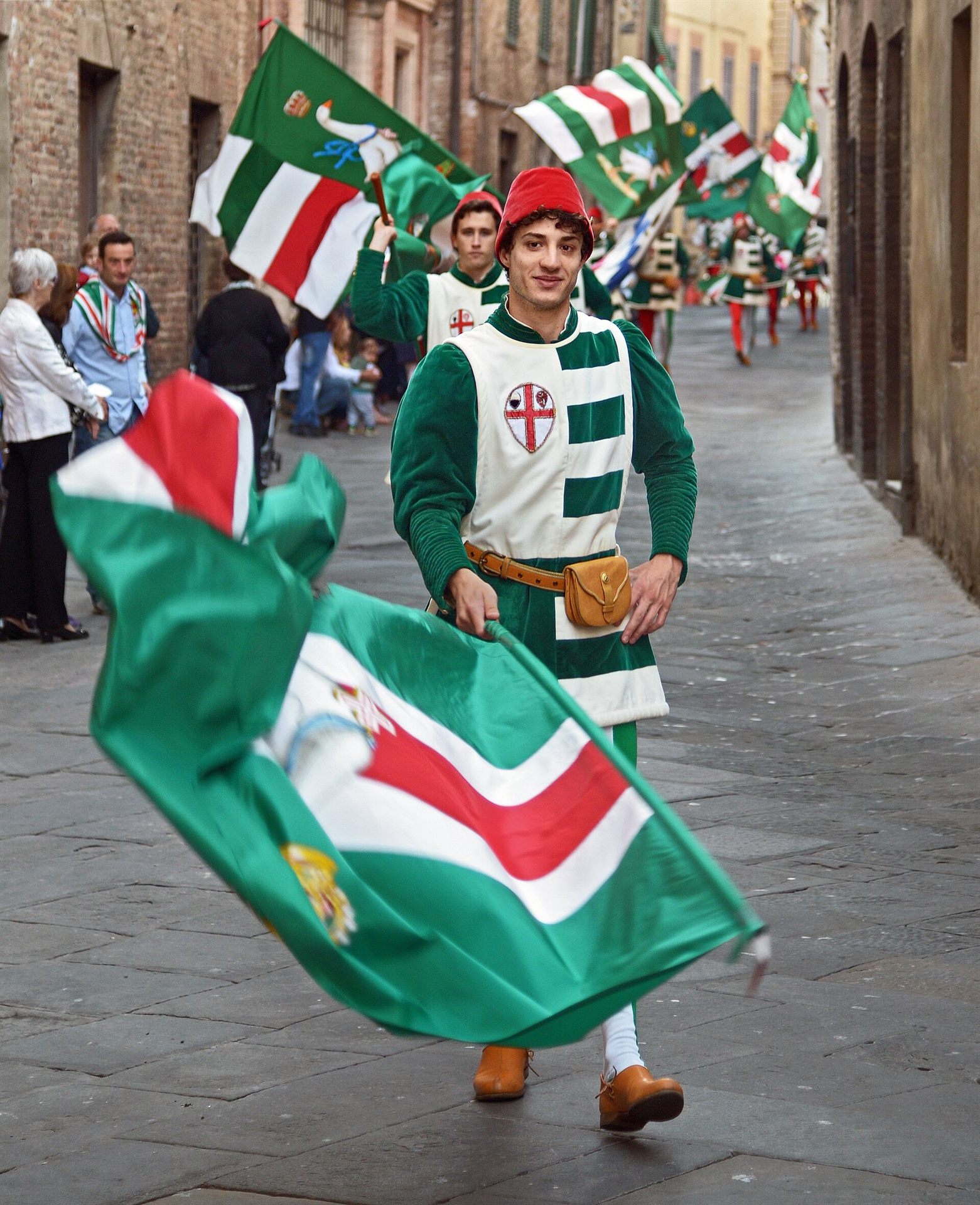
The standard-bearers and officers of the Comune open the parade; then, one after another, all seventeen contrade — the drummer, the flag-bearers, the duce with his pages, the jockey on horseback and the mighty parade horse, the «soprallasso». At every station, the flag-bearers perform the sbandierata: the flags spiral up toward the windows, and from up there they seem to salute you alone.

Two details no one who watches from a window ever forgets. The first comes before the procession: the charge of the mounted Carabinieri, sabers drawn, galloping over the tufa — the whole square roaring. The second passes almost in silence: among the costumed companies march the six suppressed contrade, extinct for centuries. Siena does not forget even its dead.

The parade closes with the Carroccio, drawn by white oxen, carrying the Drappellone that one contrada alone will soon take home. Those who have never been to the Palio think it is a wait. Those who have know it is half the show — and from your window, you miss none of it.


0
Costumed figures
0
Hours of parade
0
Contrade in procession
0
Carroccio with the Drappellone
The Race

Three laps. Ninety seconds. A year of waiting.


Visitors see ninety seconds of racing. Those born here see the final act of a drama that began four days earlier, at the Tratta, when fate assigns the horses to the contrade. Because at the Palio you do not choose your horse: you receive it. And from that moment on, the horse is king.

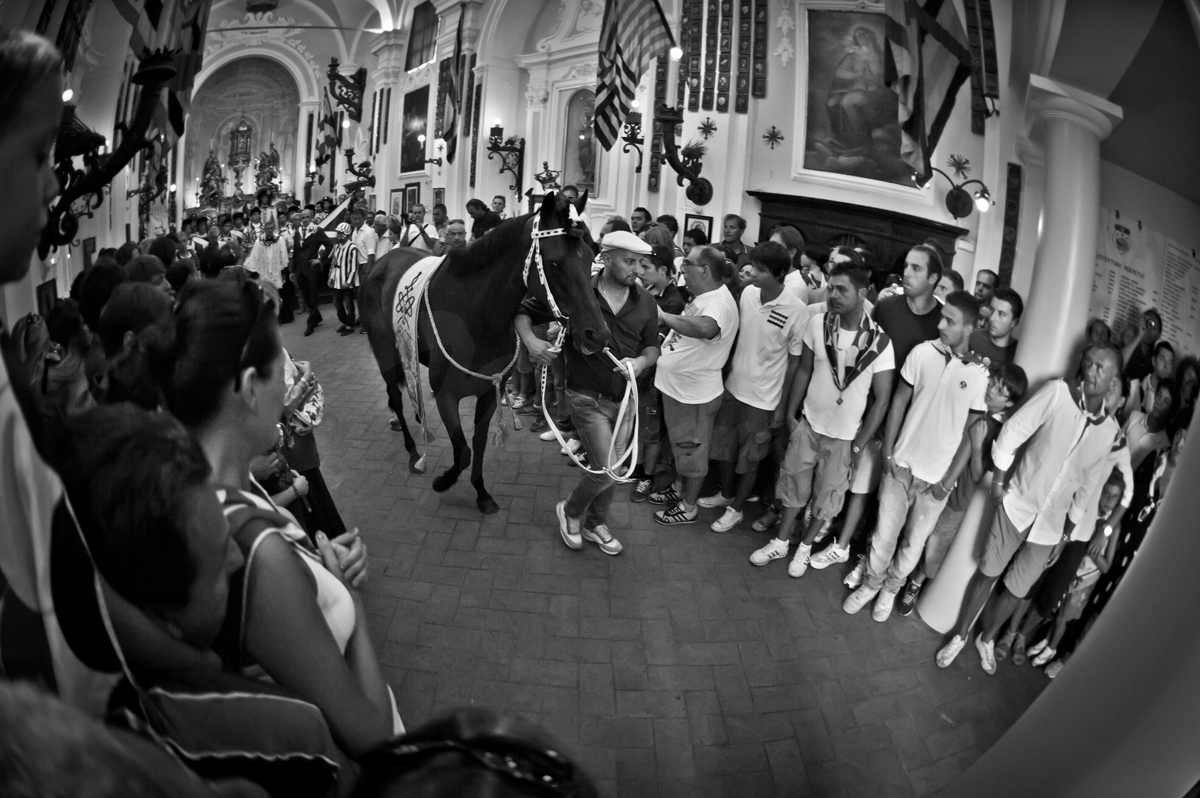
The blessing of the horse in the contrada church before the Palio
First movement

The blessing

On the afternoon of the race, the horse enters the church. Yes: inside the contrada church, among the hushed contradaioli. The priest blesses it and sends it off with Siena's most famous words: «Vai, e torna vincitore!» — go, and return a winner. And should the horse leave a souvenir on the floor, no one minds: it is a sign of luck.

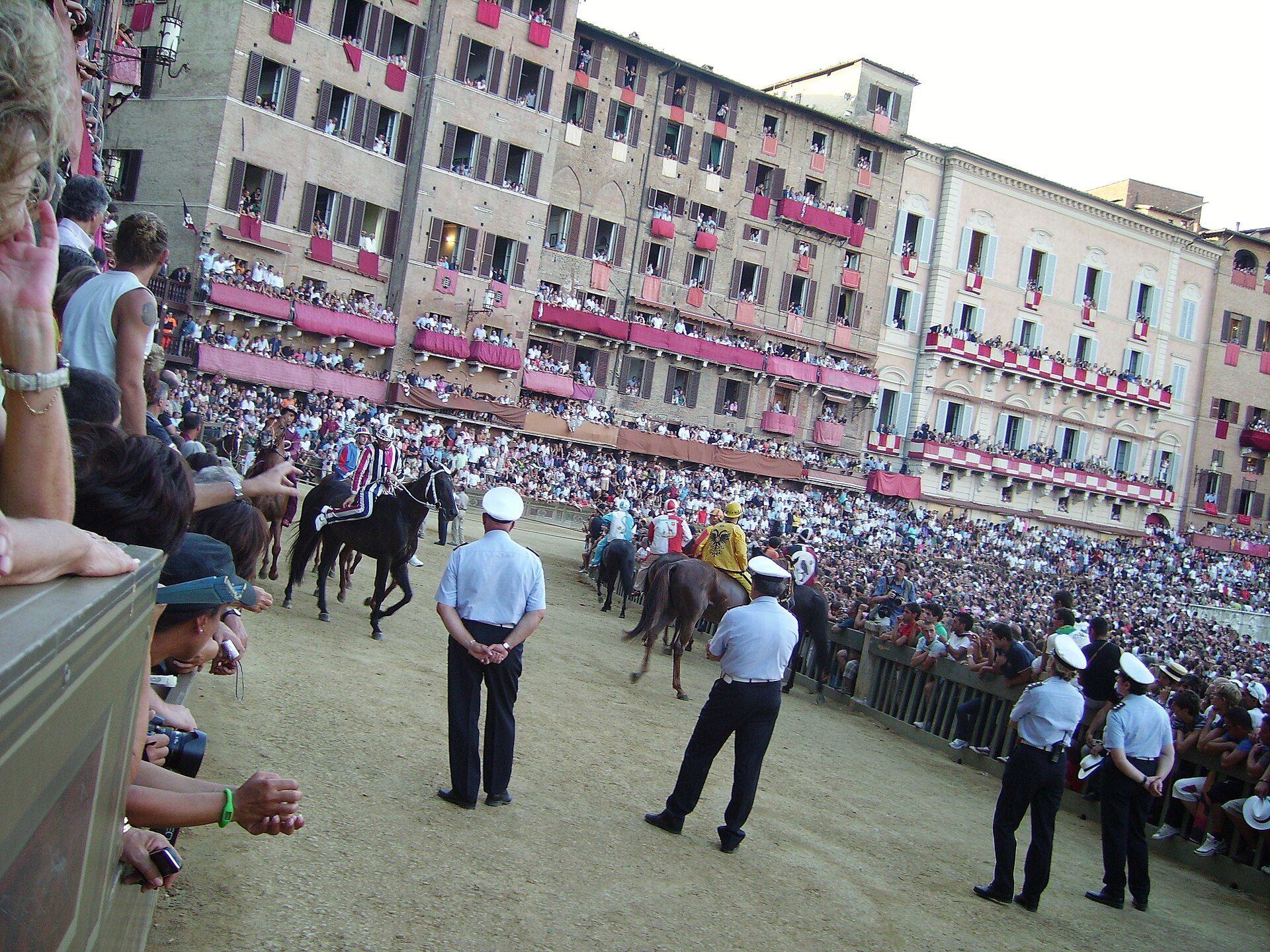
The horses lined up at the rope awaiting the start
Second movement

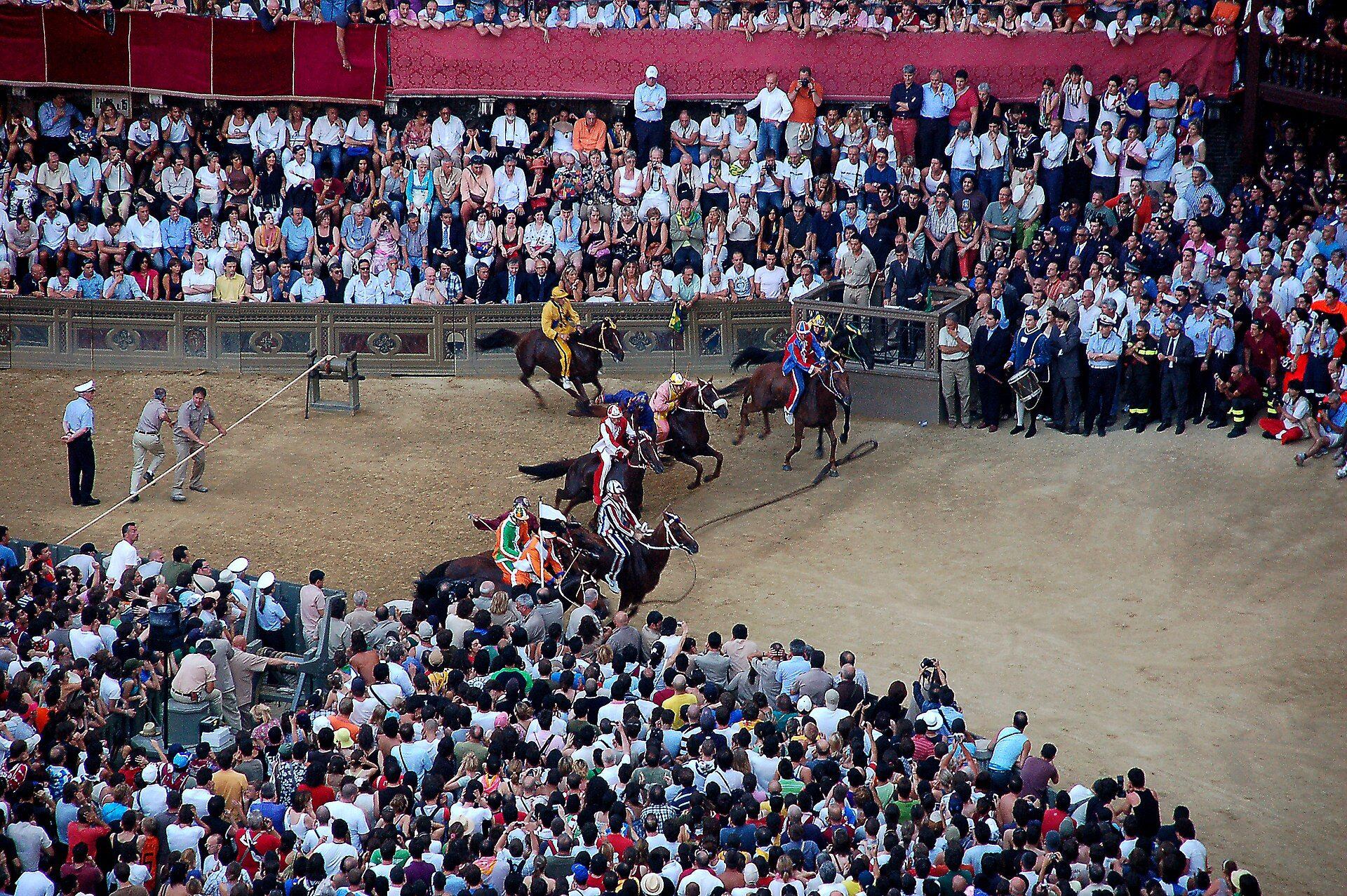
The mossa

The order at the rope is drawn by lot and revealed only at the last moment. Nine horses enter between the two ropes; the tenth, the rincorsa, decides when everything begins. The wait can last a heartbeat or an hour, between false starts and shredded nerves — while, it is whispered, the «partiti», the secret pacts between jockeys, are negotiated until the very last instant.

The jockeys riding bareback at full speed in the Palio
Third movement

Ninety seconds

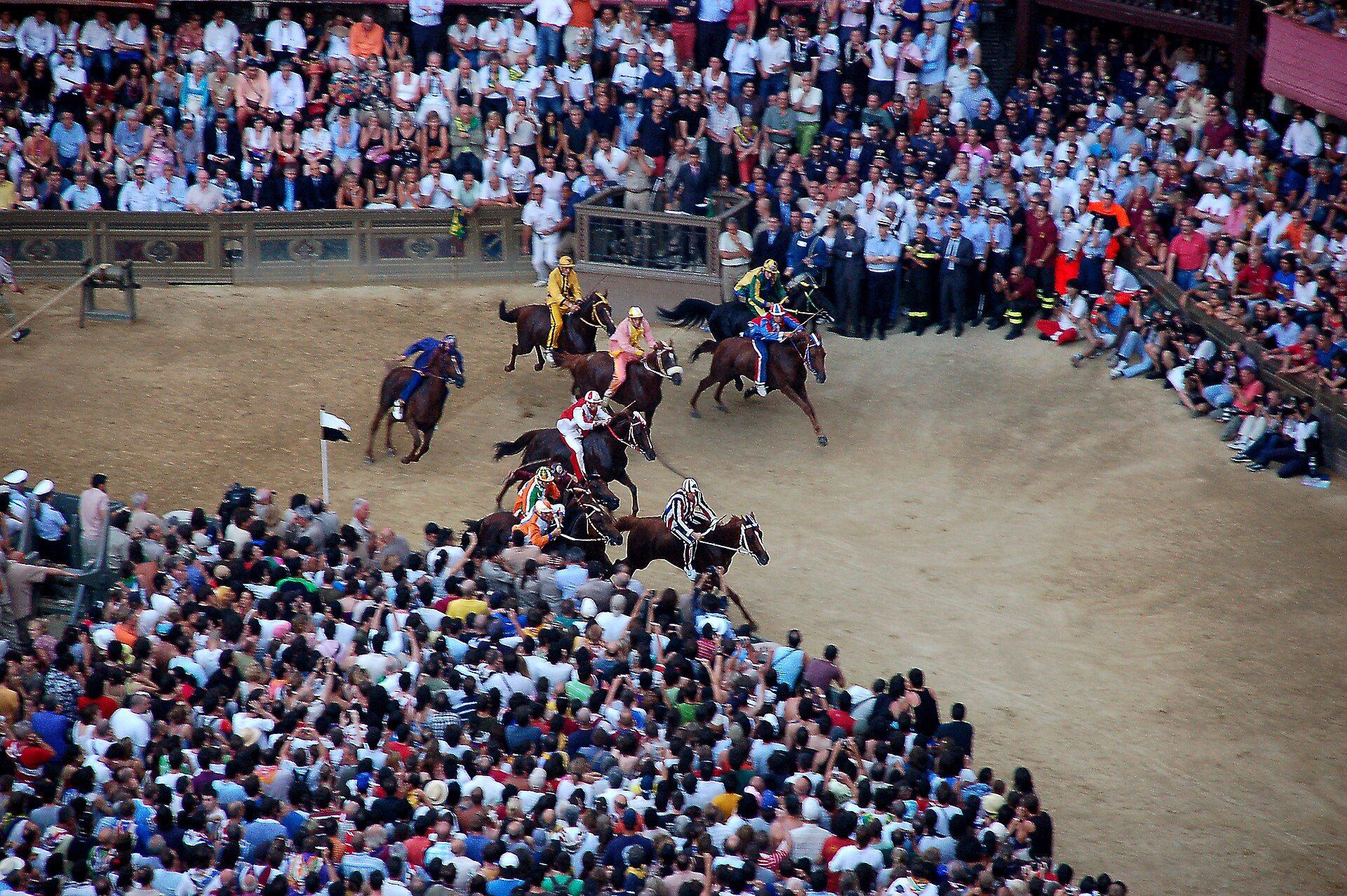
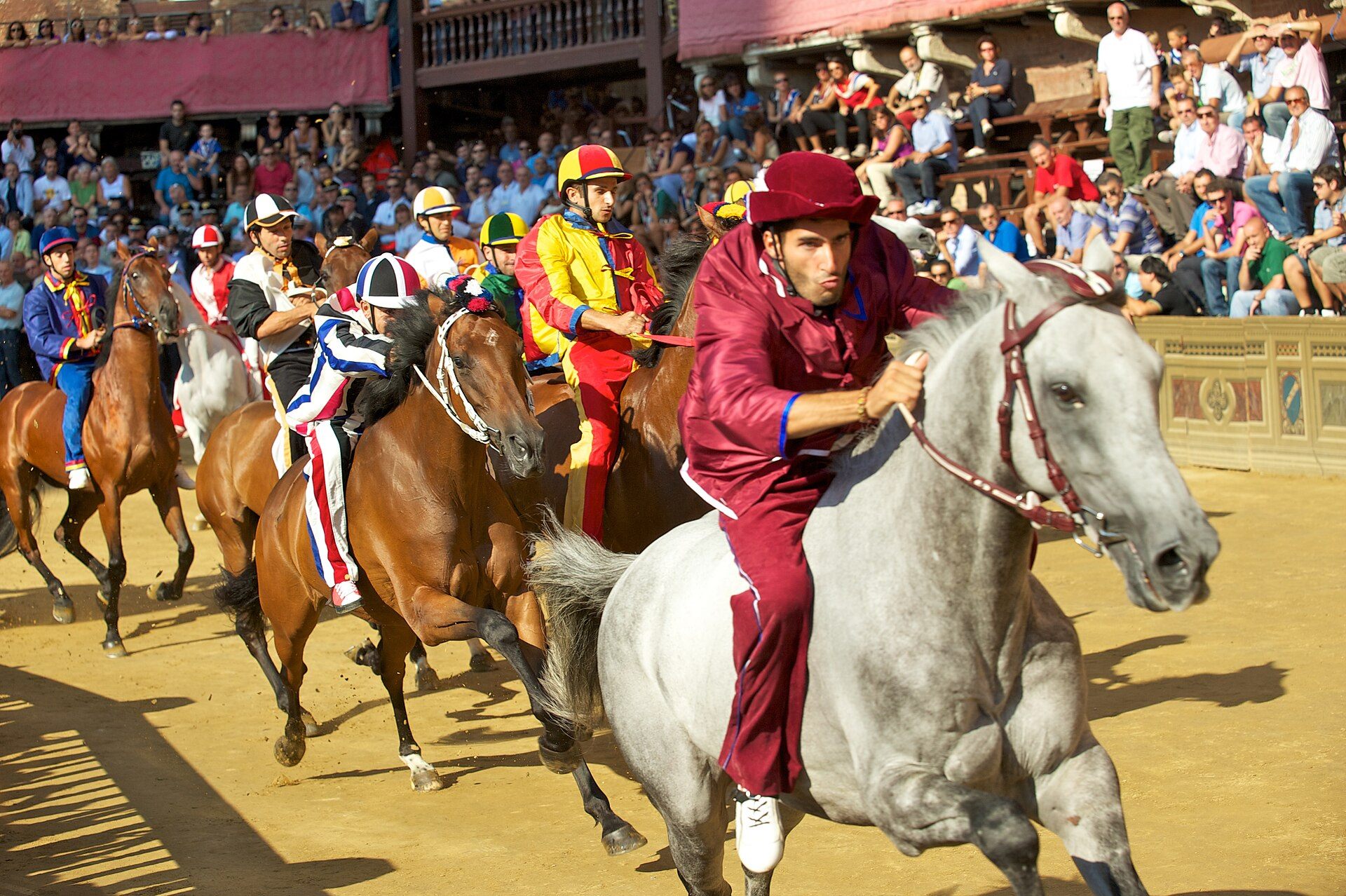
The jockeys ride bareback, whip in hand — and the rules allow them to use it on their rivals. The San Martino curve, padded with mattresses, swallows the boldest. And even a «scosso» horse — one that has lost its rider — can win: in Siena it is the horse that crosses the line, not the man.

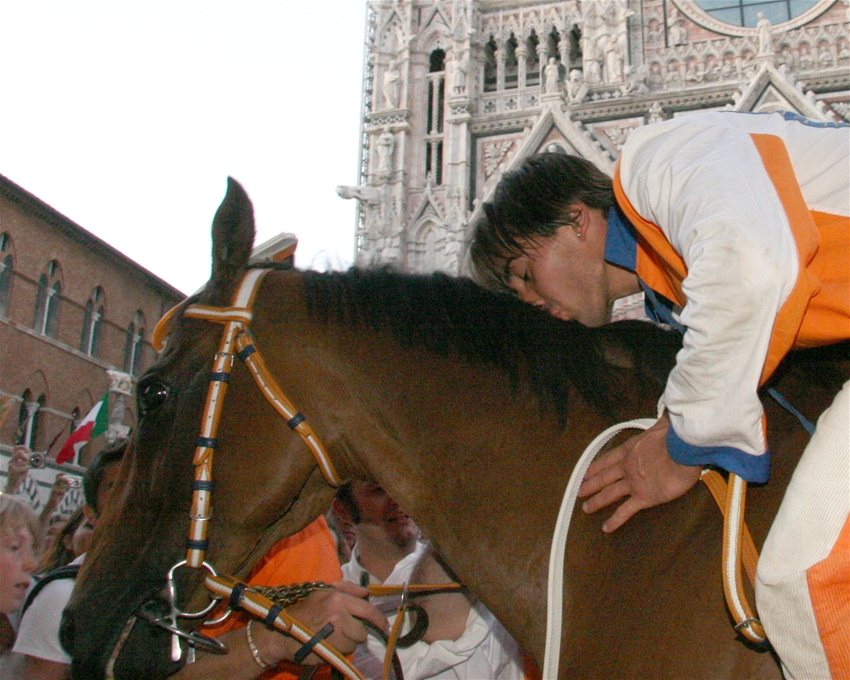
A contradaiolo kisses the horse after winning the Palio
Final movement

After the finish

At the finish flag the square erupts and the winners weep like children. Then the contrada runs to church — to Provenzano in July, to the Cathedral in August — to sing the Te Deum of thanksgiving. The cencio enters the contrada museum, never to leave again.

The horses racing beneath the Torre del Mangia
Beneath the Tower
Jockey of the Civetta contrada during a trial
The trials
The pack charging through the Palio race
The race
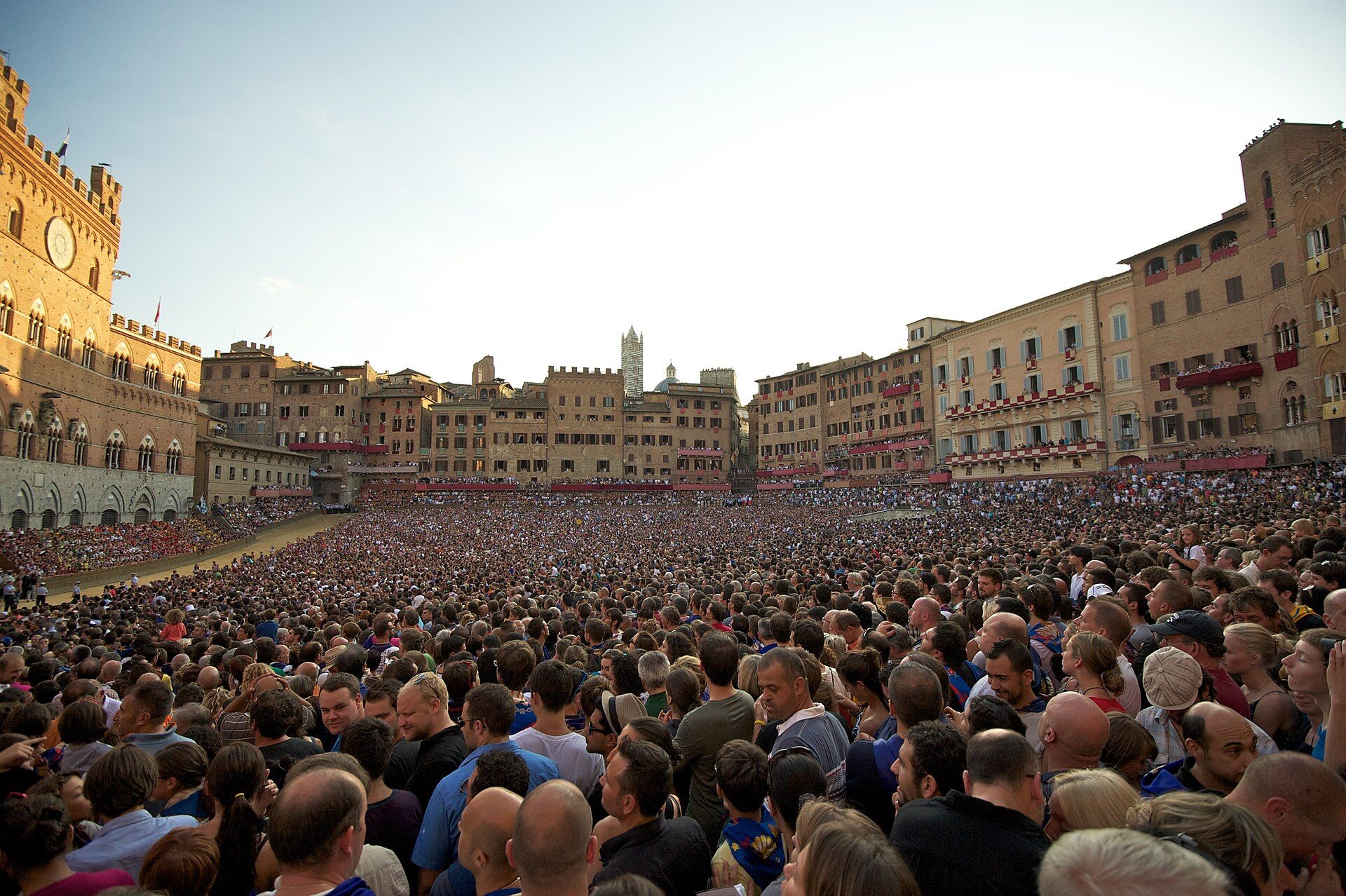
The crowd in Piazza del Campo during the Palio
The square
Piazza del Campo seen from the Torre del Mangia
From above
What the guidebooks never tell

Notes from a contradaiolo.


The Palio reveals itself in the details — the kind you learn only by lingering, glass in hand, beside someone who has been telling these stories for a lifetime.

The «nonna»

The contrada that has gone longest without a win earns a nickname both affectionate and cruel: the nonna — the grandmother. Its rivals never miss a chance to mention it — until a finish flag erases everything, and the whole square knows it before the horse has even stopped.

The pacifier

After a victory you will see elegant adults walking around Siena with a baby's pacifier in their mouths. It is not madness: it is contrada theology. To win the Palio is to be born again — and the newly born are, quite literally, newborns.

The horse at the head of the table

At the Victory Dinner, thousands of contradaioli dine at long tables in the streets of the district. And in the place of honor, at the head of the table, the most important guest of all: the horse. It was the horse that won — and no one in Siena ever forgets it.

The barbaresco

From the day of the Tratta, the horse has a shadow: the barbaresco, the contradaiolo who feeds it, watches over it and sleeps beside it in the stable. For four days, his only job in the world is to protect the king.

Beloved mercenaries

The jockeys are hired professionals, rarely Sienese, handsomely paid and baptized with nicknames that pass into legend — the greatest of all, Aceto, won fourteen Palii. Heroes when they win. «Traitors», when the square suspects they have sold the race.

Worse than losing

For a contradaiolo there is only one thing worse than not winning: watching your rival win. The rivalries are centuries old, inherited with the contrada baptism, and they make every Palio a double contest: one is run on the tufa, the other in the heart.

The Drappellone, the painted banner that is the prize of the Palio
The «cencio» — The painted Drappellone
The costumed company of the Oca contrada during the procession
The colors of a lifetime — The company of the Oca
Frequently asked questions

What everyone asks.


When is the Palio di Siena held?

Twice a year: on July 2 (Palio di Provenzano) and August 16 (Palio dell'Assunta). The three days before are filled with the Tratta — the assignment of the horses — and six trials, including the Prova Generale on the eve of the race.

How long does the race last?

About 90 seconds: three laps of Piazza del Campo on a track of tufa clay laid for the occasion. The first horse across the line wins — even «scosso», without its jockey.

Where is the best place to watch the Palio?

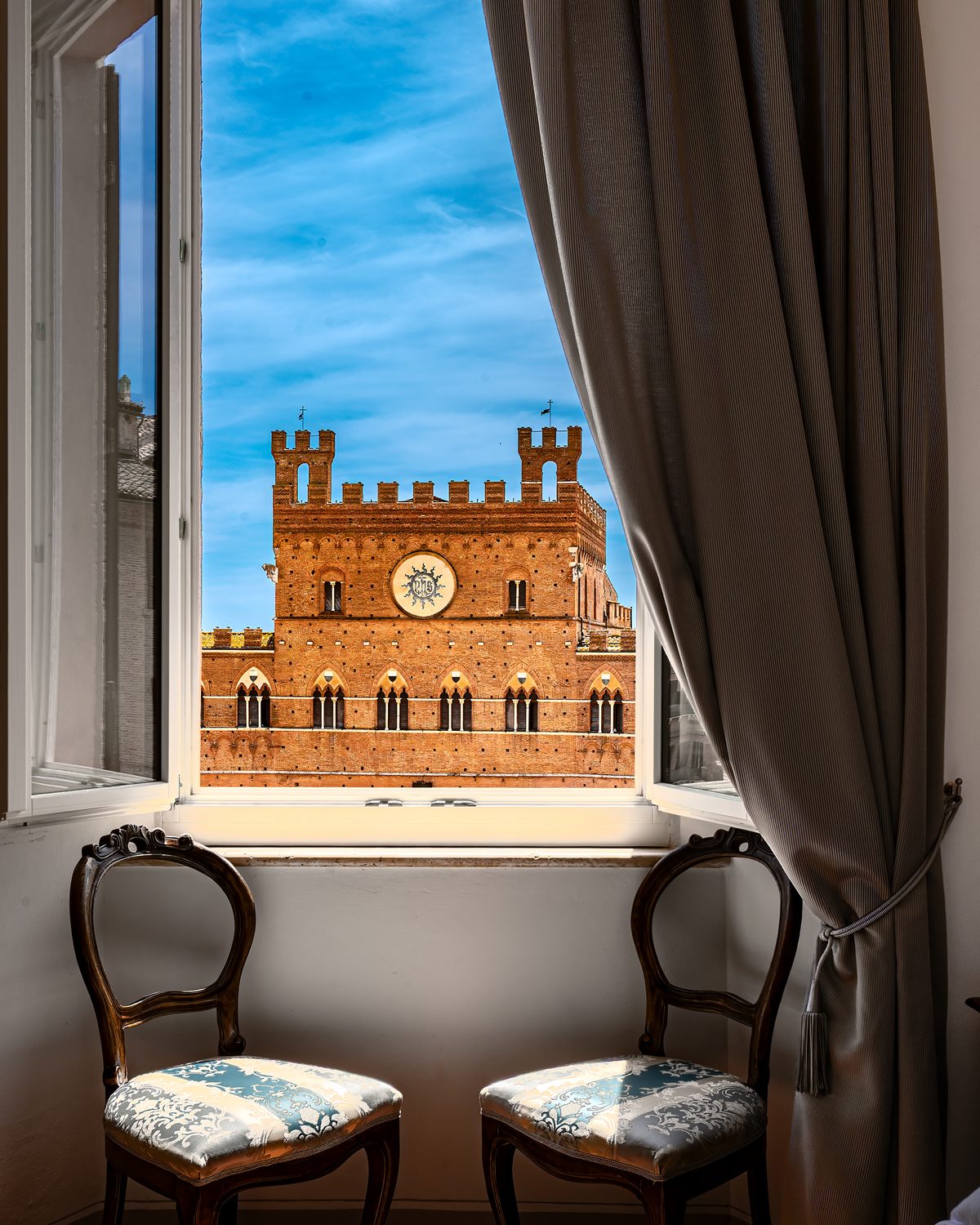
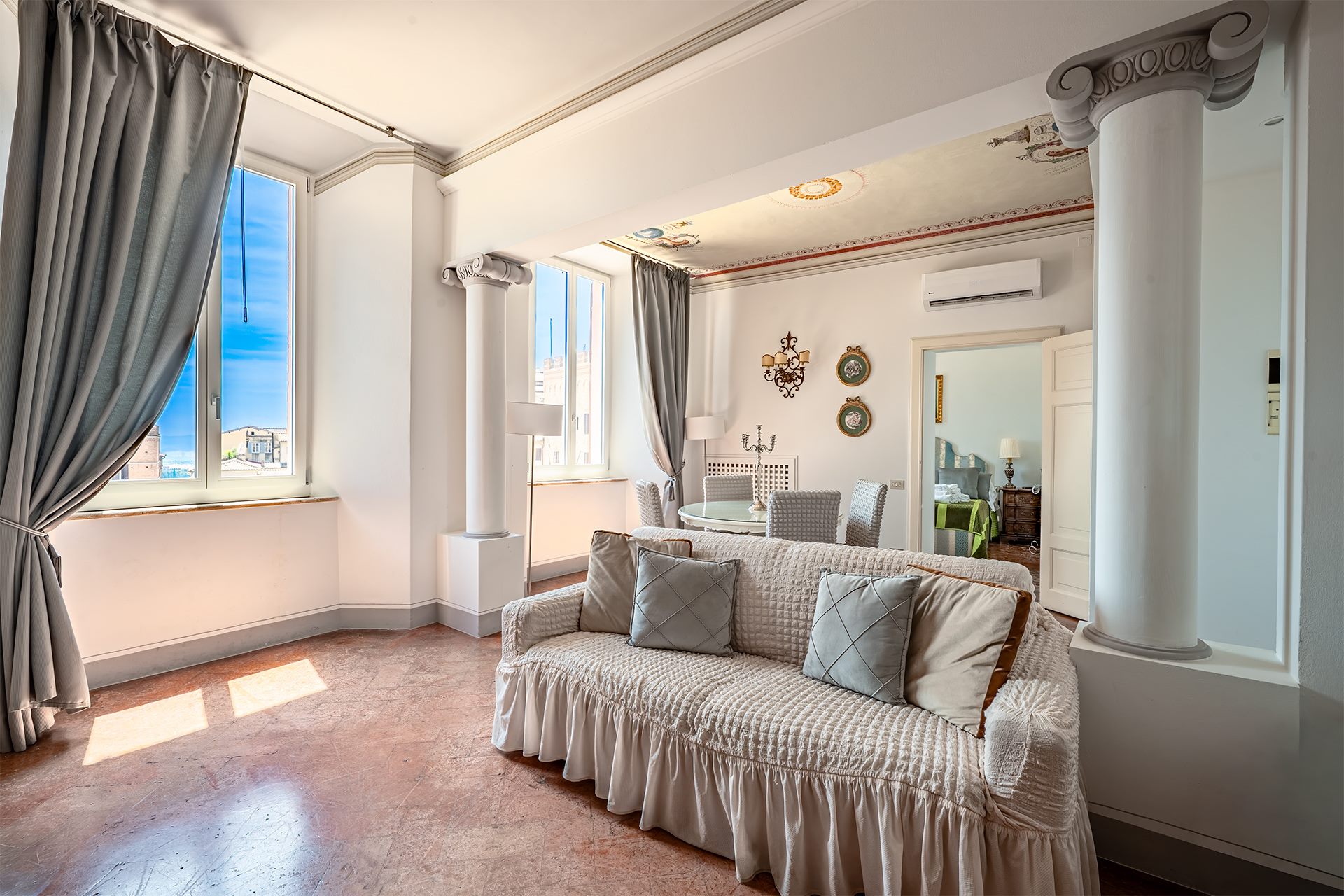
From above. The windows, balconies and terraces of the palazzos surrounding the square offer the finest view: the track a few yards below, the entire square in your field of vision, and the shade and comfort of a private palazzo. These places are very few, reserved months in advance — and they are exactly what we do.

What are the contrade?

The city's 17 historic districts: real communities with their own borders, church, museum, anthem and baptism. You do not choose your contrada: you inherit it, and you carry it for life.

What does the word «palio» mean?

It comes from the Latin pallium, the precious cloth given as the prize. The prize is still exactly that: the painted Drappellone, which the Sienese affectionately call «il cencio» — the rag. No prize money whatsoever.

What is the Historical Procession?

The great parade that precedes the race: about 600 figures in Renaissance costume march for roughly two hours on the tufa track — all 17 contrade with drummers, flag-wavers and their sbandierate, the offices of the Comune and finally the ox-drawn Carroccio with the Drappellone. For those watching from a window, it is an integral part of the show, not a wait.

Can you watch for free?

Yes, from the center of the square. But that means entering hours early and standing in the summer sun among tens of thousands of people, unable to move until the end. It is an authentic experience — and an exhausting one. The private window exists for those who want the same emotion, with a different kind of comfort.

The Windows

Watch it from where the Sienese watch it.


Twelve private views over the square. Each with a name, a history, a perspective.

Discover the windows